Compare robots

Comparison ready

3 robots selected.

The comparison cards start below. Open the editor only when you need to swap the shortlist.

Share
Edit selected robots
412 robots 9 categories 173 priced

Comparing 3 robots

Green cells flag numeric leaders, while AI, sensors, and capability rows keep the real buying tradeoffs visible.

Updating comparison...

Sources and record checks

Record checks are not independent testing or confirmation of every claim. Official sites provide manufacturer context; source context explains the record.

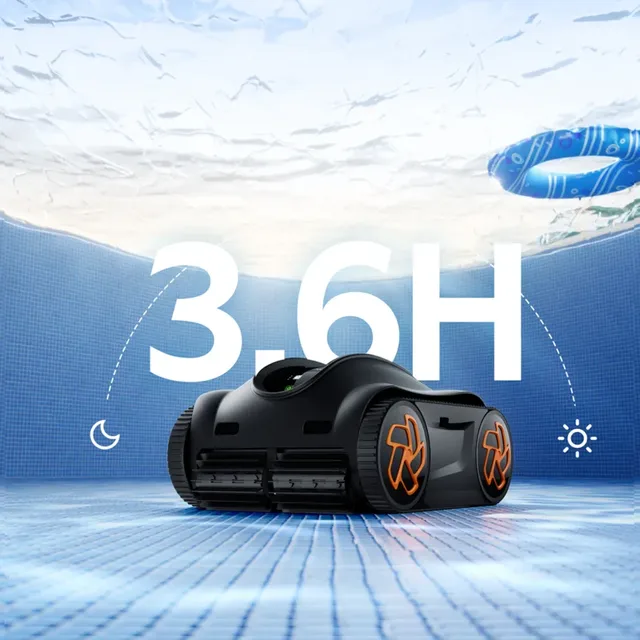
K36

Record last checked: 2026-05-25

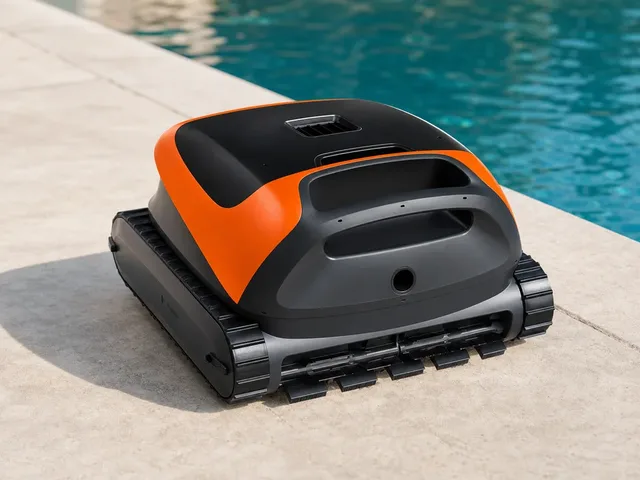
Sora 30

Record last checked: 2026-04-23

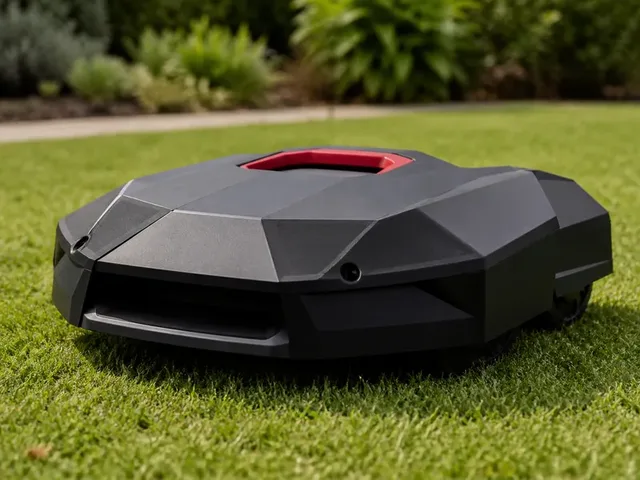
Lawn Companion X25

Record last checked: 2026-07-03

Each row compares one spec across your shortlist. Green marks the best value.

Price

K36
$499 USD
Price details

iGarden's official store lists the K36 at $499 USD with a $799 compare-at/original price ($300 instant savings) as of 2026-05-06; official Shopify product data marks the K36 variant available. Keep current price=499 USD.

Sora 30
$999 USD
Price details

MSRP $999; official Beatbot store listed a 25% promotional price of $749 as of 2026-04-23.

Lawn Companion X25
$1,422 USD
Price details

Official Volta FAQ lists fixed purchase packages with hardware ownership from day one and 24 months of Lawn Intelligence prepaid: PRO $1,422 (regular $1,656), ULTRA $1,602 (regular $2,136), and ULTRA 2x $2,856 (regular $3,999, two robots). Financing is offered at checkout through third-party providers; rate, APR, and term depend on approval.

Height

K36
Not officially disclosed
Sora 30
10.51" (267 mm)
Lawn Companion X25
10 in

Weight

K36
9.8 kg (21.6 lbs) net
Sora 30
19.6 lbs (8.9 kg)
Lawn Companion X25
19.5 lbs

Battery Life

K36
3.6 h (floor only), 2.25 h (floor + wall + waterline), 2.25 h (turbo + floor only), 1.85 h (turbo + all modes)
Sora 30
Up to 5 hours (floor cleaning), up to 4.5 hours (combined floor/wall/waterline)
Lawn Companion X25
Charge/discharge ratio about 1:1; work session about 1 h 30 m for a 1-5 mm cut or 50 m for a 15-20 mm cut; up to 11,000 sq ft coverage

Max Speed

K36
Not disclosed
Sora 30
Not officially disclosed
Lawn Companion X25
9.84 in/s average; 17.72 in/s peakNot safely comparable as a typed unit

AI

K36
AI-Inverter™ dynamic power adjustment, intelligent path optimization, infrared + IMU pool mapping
Sora 30
SonicSense ultrasonic obstacle detection and avoidance, optimized S-shaped cleaning path planning, automatic zone adaptation for floor/walls/waterline/platforms
Lawn Companion X25
Volta Lawn Intelligence combines computer vision, GNSS, IMU data, a hex-cell lawn model, per-lawn learning, and fleet intelligence for adaptive mowing and lawn-health analysis

Sensors

K36
Infrared sensors, IMU (Inertial Measurement Unit), AI-Powered Route Learning
Sora 30
13 integrated sensors, 2 ultrasonic sensors, SonicSense obstacle avoidance
Lawn Companion X25
Downward-facing camera, GNSS receiver, 6-axis IMU, Rain sensor, 360° floating hexoskeleton contact detection

Connectivity

K36
Bluetooth, 2.4 GHz Wi-Fi
Sora 30
5 GHz Wi-Fi, 2.4 GHz Wi-Fi, Bluetooth, Beatbot app (iOS, Android, Apple Watch)
Lawn Companion X25
2.4 GHz Wi-Fi

Status

K36
Available
Sora 30
Available
Lawn Companion X25
Available

Category

K36
Cleaning
Sora 30
Cleaning
Lawn Companion X25
Lawn & Garden
More specifications (4)

Includes rows even when values are not recorded.

Charging Time

K36
Approx. 4 hours
Sora 30
Approximately 4.5 hours (65W quick charge)
Lawn Companion X25
About 1 h 10 m average; roughly 1:1 charge-to-work ratio

Degrees of Freedom

K36
N/A
Sora 30
N/A
Lawn Companion X25
N/A

Voice Assistants

K36
None
Sora 30
None
Lawn Companion X25
None

Manufacturer

K36
iGarden
Sora 30
Beatbot
Lawn Companion X25
Volta

Capabilities

K36

4L debris basket with 180 μm filtrationApp scheduling (AI Timer: 24/48/72-hour intervals)Auto-docking and self-drainingCordless pool cleaningDual scrubbing brushesFloor, wall, and waterline cleaningIPX8 waterproof touchscreenIntelligent 3D S-path navigationMultiple cleaning modes (floor only, wall & waterline only, full coverage)Obstacle climbing and avoidanceTurbine-grade impeller (up to 5,810 GPH / 22 m³/h)Turbo 200% mode for heavy debris

Sora 30

6,800 GPH suction with 5.2L debris capacity65W fast charging via titanium plugApp control with one-tap retrievalCordless robotic pool cleaningDual-group roller brush system (4 bottom brushes)Saltwater pool support (up to 5,000 ppm)Shallow-platform cleaning down to 8 inches (20 cm)Smart Water-Surface Parking for easy retrievalSonicSense ultrasonic obstacle avoidanceThree cleaning modes (Floor, Standard, ECO)Three-zone coverage: floor, walls, waterline

Lawn Companion X25

Adaptive mowing based on lawn-condition mappingAutomatic rain pause and resumeCoverage up to about 11,000 sq ft per robotCrossing support for disconnected lawn zonesGeofencing and anti-theft account lockMulti-robot deployment for larger propertiesUp to 40% slope handlingVision-based lawn learning and boundary discoveryWire-free autonomous mowing without perimeter wires or RTK base stations

How to Compare Robots

Use this flow to get to a clean shortlist fast. The route works best as a dense research workbench, not a marketing page.

1

Choose comparable robots

Start with robots that solve the same job. Use category anchors like Humanoid, Cleaning, Companions, Research before you worry about micro-spec wins.

2

Read the big deltas first

Check price, status, battery, sensors, and capabilities before getting lost in minor spec rows.

3

Switch to differences only

Once you have a shortlist, hide shared rows. That turns the table from a spec dump into a real decision tool.

Cross-category comparisons still have value

A dedicated cleaner versus a home assistant with cleaning features can reveal whether you really need a specialist or just broader household coverage. Compare around the same outcome, not the same marketing language. And when blank-page friction is the problem, use one of the prebuilt quick-start pairings in the workbench above — open one, swap robots, and keep moving.

Making Your Decision

Turn comparison rows into an actual recommendation — not just more reading.

1

Weighted priorities

Not all spec deltas matter equally. Rank your buying criteria before crowning a winner.

  • List must-haves — smart-home platform, clearance, shipping status, or anything that eliminates a robot instantly.
  • Pick your top 3 differentiators — navigation, noise, battery, support, or whatever changes daily use.
  • Score only the finalists against those. The robot that wins your real priorities beats the one with the most green cells.
2

Total cost of ownership

The sticker price is only one row. Subscriptions, consumables, and service access often decide the real winner.

Subscriptions

Cloud AI and premium app tiers can make a cheaper robot more expensive over three years.

Consumables

Brushes, pads, filters, and bags flip the value story on high-frequency robots.

Energy & battery

Large batteries and frequent charging reveal everyday operating demands.

Repair & warranty

Local servicing and spare-parts access are the quietest but most important long-term costs.

3

Environment check

Specs describe ideal conditions. Your rooms, pets, and Wi-Fi determine what actually performs.

  • Floor types — carpet, hardwood, tile, and transition handling.
  • Space layout — open plans vs. multi-room homes with tight doorways.
  • Wi-Fi coverage — cloud-heavy robots need stable signal everywhere.
  • Household — pets, kids, shared spaces, and noise tolerance.

Purchase and deployment access

Available listings: 125. Pre-order listings: 54. Active records: 130. Available indicates an ordering listing, not confirmed stock. Pre-order indicates a reservation listing, not immediate delivery. Active status alone does not confirm public purchase availability or deployment. Other statuses do not establish a current purchase listing. Confirm regional access, stock, reservation terms, and delivery with the manufacturer.

When it's too close to call

If two robots are still neck-and-neck, use softer signals that affect ownership quality more than spec sheets admit.

Return policy User community Ecosystem Aesthetics

Comparison FAQ

Questions buyers ask before the final click

Short answers to the questions that usually show up once the shortlist is live and the tradeoffs feel real.

Frequently Asked Questions

Using the workspace
How many robots can I compare at once?
You can compare up to four robots at once. Two or three is usually the cleanest decision view, but four-way comparisons work well for wider market scans.
What does 'Show differences only' do?
It hides rows where all selected robots share the same value, leaving only the rows that actually change your decision. It is especially useful for same-brand or same-category shortlists.
Can I compare robots from different categories?
Yes. You can compare any of the 412 robots in the database. Cross-category comparisons work best when the robots still compete for the same outcome in your home or workflow.
What makes a good comparison?
The best pairings share at least one real-world anchor: same job, similar price band, same room constraints, or competing brand tier. That keeps the table decision-focused instead of random.
Sharing & shortlisting
How do I share a comparison?
Once you have a live shortlist, a Share this comparison link appears in the workbench. It preserves your selected robots and the differences-only toggle in a permanent URL.
Can I save or bookmark a comparison for later?
Yes. Every live comparison has a stable route, so bookmarking the page preserves the exact configuration you built.
Can I compare by price alone?
Price is one row in the compare table, but if you want pure price sorting first, the all robots page is the better place to shortlist before coming back here.
Data & methodology
Are specifications up to date?
ui44 comparison data is sourced from official manufacturer documentation and re-verified on a rolling basis. Shipping products get the most frequent freshness checks.
What if a spec is missing?
A dash or 'Not specified' usually means the manufacturer has not published the detail clearly. It does not automatically mean the robot lacks the feature.
How should I compare robots at different development stages?
Status labels describe catalog records, not measured operational reliability. Available indicates a purchase listing, not verified stock or shipping dates. Active alone does not confirm public purchase access. Pre-order indicates a reservation listing, not engineering completion or a guaranteed delivery queue position. Development and Prototype identify recorded stages; Discontinued identifies a discontinued listing. Compare documented performance and current manufacturer terms, including any recorded sales notes, for the specific model and region.
Can I compare specific sensors or components more deeply?
Yes. The compare table gives you the side-by-side overview, then the components directory lets you go deeper on shared sensors, radios, and platform pieces across the catalog.